What Are the Most Common Varicocele Symptoms?
Wiki Article
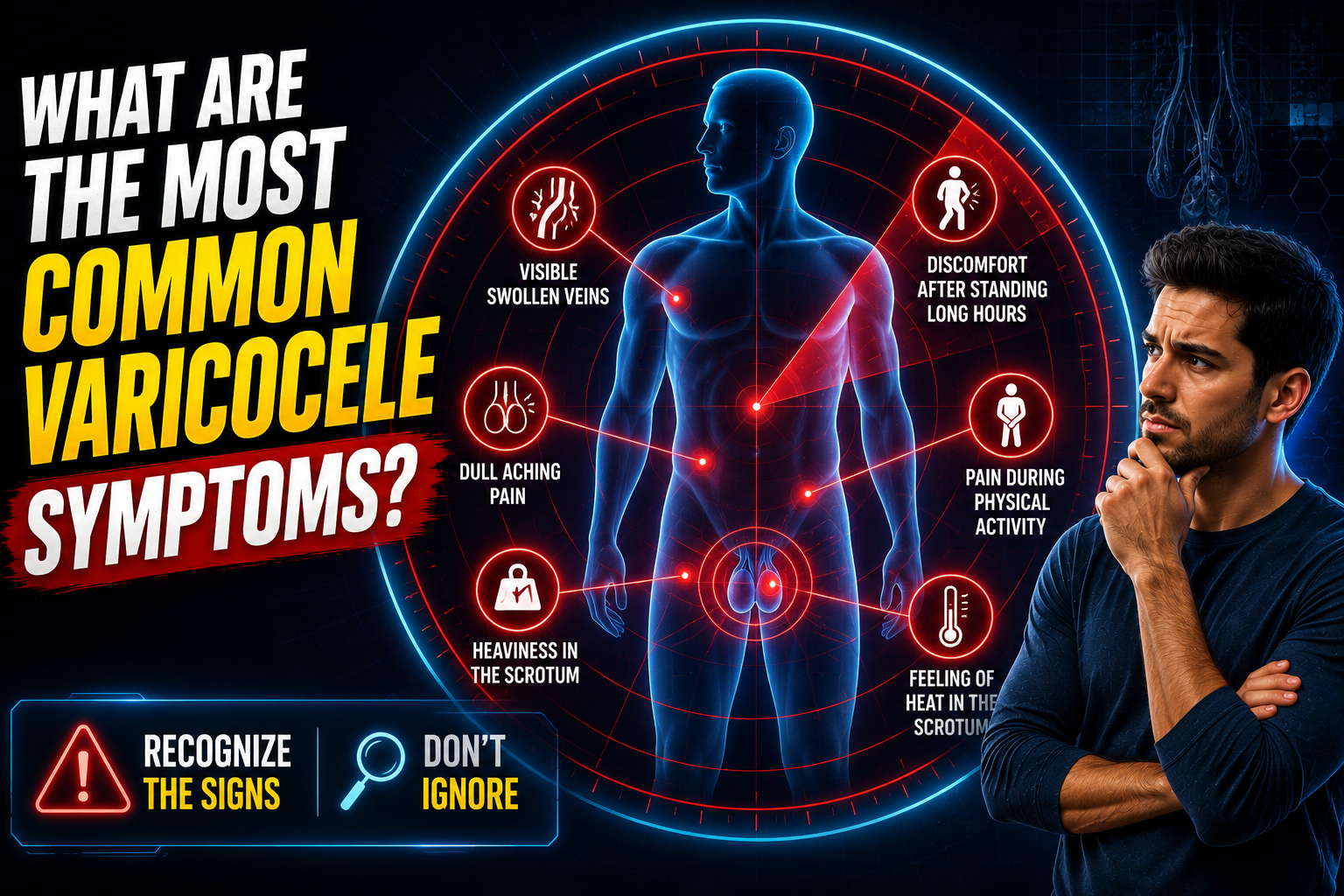
Many men with a varicocele do not experience any symptoms, especially during the early stages. However, when symptoms do occur, they often develop gradually and may include a dull aching pain, a feeling of heaviness in the scrotum, enlarged veins, or fertility concerns. Recognising these symptoms early can help ensure timely evaluation and appropriate treatment if needed.
Because varicocele symptoms can resemble those of other scrotal conditions, a proper medical assessment is essential. Understanding varicocele symptoms can help you identify when the condition should be evaluated by a healthcare professional.
What Is a Varicocele?
A varicocele is an enlargement of the veins within the scrotum caused by abnormal blood flow.
It develops when:
The valves inside the veins do not function properly.
Blood flows backward instead of returning to the heart.
Blood collects inside the veins.
The veins become enlarged and twisted.
According to the European Association of Urology (EAU), varicocele is one of the most common conditions affecting the scrotal veins and is frequently associated with male infertility.
What Are the Most Common Symptoms?
Although symptoms vary from person to person, the most commonly reported include:
A dull aching pain in the scrotum
A feeling of heaviness
Enlarged or twisted veins that may feel like a "bag of worms"
Discomfort after standing for long periods
Pain after strenuous physical activity
Symptoms that improve when lying down
Some men may notice only one symptom, while others experience several.
Can a Varicocele Be Present Without Symptoms?
Yes.
Many men have a varicocele without knowing it.
An asymptomatic varicocele may be discovered during:
A routine physical examination
A fertility evaluation
A Scrotal Doppler Ultrasound performed for another reason
Even without symptoms, medical evaluation may be recommended if fertility concerns exist.
Why Do Symptoms Become Worse During the Day?
Many men notice that symptoms become more noticeable later in the day.
This happens because:
Standing increases pressure inside the veins.
Blood pools within the enlarged veins.
Physical activity may increase venous congestion.
Lying down often reduces pressure and temporarily relieves discomfort.
Can a Varicocele Affect Fertility?
Yes.
A varicocele may interfere with normal testicular function by:
Increasing the temperature around the testicle
Affecting sperm production
Reducing sperm quality
Influencing sperm movement
Not every man with a varicocele develops fertility problems, but it remains one of the most common treatable causes of male infertility.
How Are Varicocele Symptoms Diagnosed?
Doctors usually begin with:
Medical history
Physical examination
A Scrotal Doppler Ultrasound is commonly recommended to evaluate:
Enlarged veins
Blood flow
Venous reflux
Testicular size
Overall scrotal anatomy
These findings help confirm the diagnosis and determine whether treatment is needed.
When Should You See a Doctor?
Medical evaluation is recommended if you experience:
Persistent scrotal pain
A feeling of heaviness that does not improve
Enlarged or visible veins
Fertility concerns
Changes in testicular size
Symptoms that gradually worsen
Early diagnosis helps determine whether monitoring or treatment is appropriate.
What Treatment Options Are Available?
Treatment depends on the severity of symptoms and individual health goals.
Options may include:
Regular observation
Surgical varicocelectomy
Varicocele Embolization
Varicocele Embolization is a minimally invasive procedure performed by an interventional radiologist. Using a thin catheter and image guidance, the abnormal veins are blocked, allowing blood to flow through healthy veins without the need for open surgery.
Conclusion
Varicocele symptoms often develop gradually and may include a dull aching pain, scrotal heaviness, enlarged veins, or fertility concerns. While many men remain symptom-free, persistent discomfort or changes in testicular health should not be ignored. A physical examination and Scrotal Doppler Ultrasound can accurately diagnose the condition and help determine whether treatment is necessary.
For men whose symptoms affect daily life or reproductive health, Varicocele Embolization offers a minimally invasive, non-surgical treatment that restores healthier blood flow by blocking the abnormal veins. Men seeking expert evaluation and advanced treatment options can consult an interventional radiologist Jaipur to discuss the most appropriate management for their condition.
Frequently Asked Questions
What are the earliest symptoms of a varicocele?
The earliest symptoms may include a mild dull ache, a feeling of heaviness in the scrotum, or enlarged veins that become more noticeable after standing.
Can a varicocele have no symptoms?
Yes. Many men have a varicocele without noticeable symptoms, and it may only be discovered during a routine examination or fertility assessment.
Why do varicocele symptoms get worse after standing?
Standing increases pressure in the affected veins, allowing more blood to pool inside them, which can make discomfort more noticeable.
How are varicocele symptoms diagnosed?
Doctors diagnose a varicocele using a physical examination and a Scrotal Doppler Ultrasound to evaluate blood flow and vein enlargement.
When should I seek medical attention for varicocele symptoms?
You should see a doctor if you have persistent scrotal pain, enlarged veins, fertility concerns, changes in testicular size, or symptoms that gradually worsen.
Report this wiki page